
'/%3e%3cdefs%3e%3clinearGradient%20id='prefix__paint0_linear_4737_37157'%20x1='3.018'%20y1='23.6'%20x2='44.925'%20y2='24.977'%20gradientUnits='userSpaceOnUse'%3e%3cstop%20stop-color='%231CB7FF'/%3e%3cstop%20offset='.502'%20stop-color='%232FF58B'/%3e%3c/linearGradient%3e%3c/defs%3e%3c/svg%3e)


Who is Sir Jim Ratcliffe, the billionaire Ineos owner running Manchester United?
Feb 12 2026 11:10 · By Lawrence Ostlere · 273 Reads


Sir Jim Ratcliffe has been widely criticised for his comments on immigration , with the prime minister Sir Keir Starmer calling for the Manchester United co-owner to apologise.
The billionaire, who is founder and chairman of one of the world's largest chemical companies, Ineos, said in an interview with Sky News that “the UK has been colonised by immigrants” and politicians needed to “do some difficult things with the UK to get it back on track”.
It is a rare public outburst from the historically low-profile Ratcliffe, who has put himself increasingly in the public spotlight in recent years with his forays into the world of sport, where his ventures include cycling, sailing, F1 and football.
Ratcliffe has a 25 per cent share in Manchester United after paying £1.3bn for Class B shares from the Glazer family, who retain the biggest part of the club, in December 2023. He has assumed control of football operations at United and vowed to restore the club to their former heights.
open image in gallery
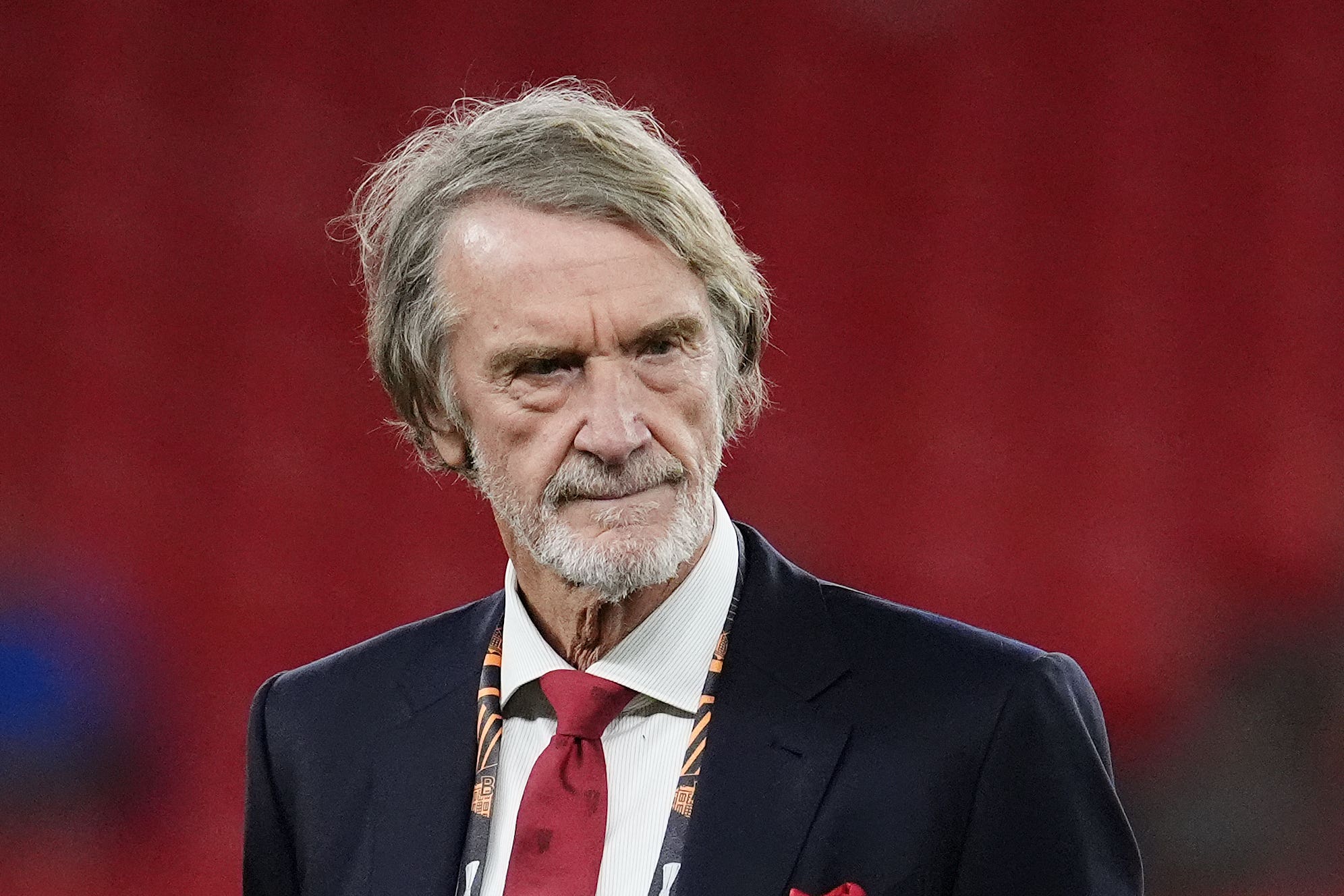
How did Ratcliffe make his money?
Ratcliffe had a relatively modest upbringing in Lancashire and then Yorkshire during the 1950s and 60s before studying at the University of Birmingham and London Business School, and made his fortune recovering struggling companies in the oil and gas sector.
Politically, he is passionately pro Brexit as well as a strong advocate for fracking, with Ineos poised to be one of the leaders should the UK’s shale gas industry take off. He has courted controversy after not only moving himself to a tax haven in Monaco but also his company’s headquarters, shifting Ineos to a new base in Switzerland in 2010 before it returned to London five years later.
Ineos is one of the largest chemical companies in the world, reporting revenues of €16.2bn (£12.6bn) in 2024.
What is his net worth?
Ratcliffe certainly has the funds to buy a stake in Manchester United. Recent rich lists by Forbes, Bloomberg and The Times pitch his net worth in the region of £9bn.
What else does Ineos do in sport?
Ratcliffe owns Swiss Super League club FC Lausanne-Sport, where his investment brought in notable players including Enzo Zidane, the son of Zinedine. But he angered fans by attempting to redesign the historic club’s badge to incorporate elements of Ineos branding, including the petrochemical company’s distinctive ‘O’ and its orange colours. The proposed logo was scrapped after a backlash from supporters.
He also owns French club Nice, bought for €100m.
Ineos also sponsors the Ineos Grenadiers cycling team (once called Team Sky) and has a primary link-up with Mercedes in Formula One, as well as Ineos Team UK in sailing.
A sponsorship of the All Blacks ended in a dispute with New Zealand Rugby over contractual issues when Ineos pulled out of the deal.
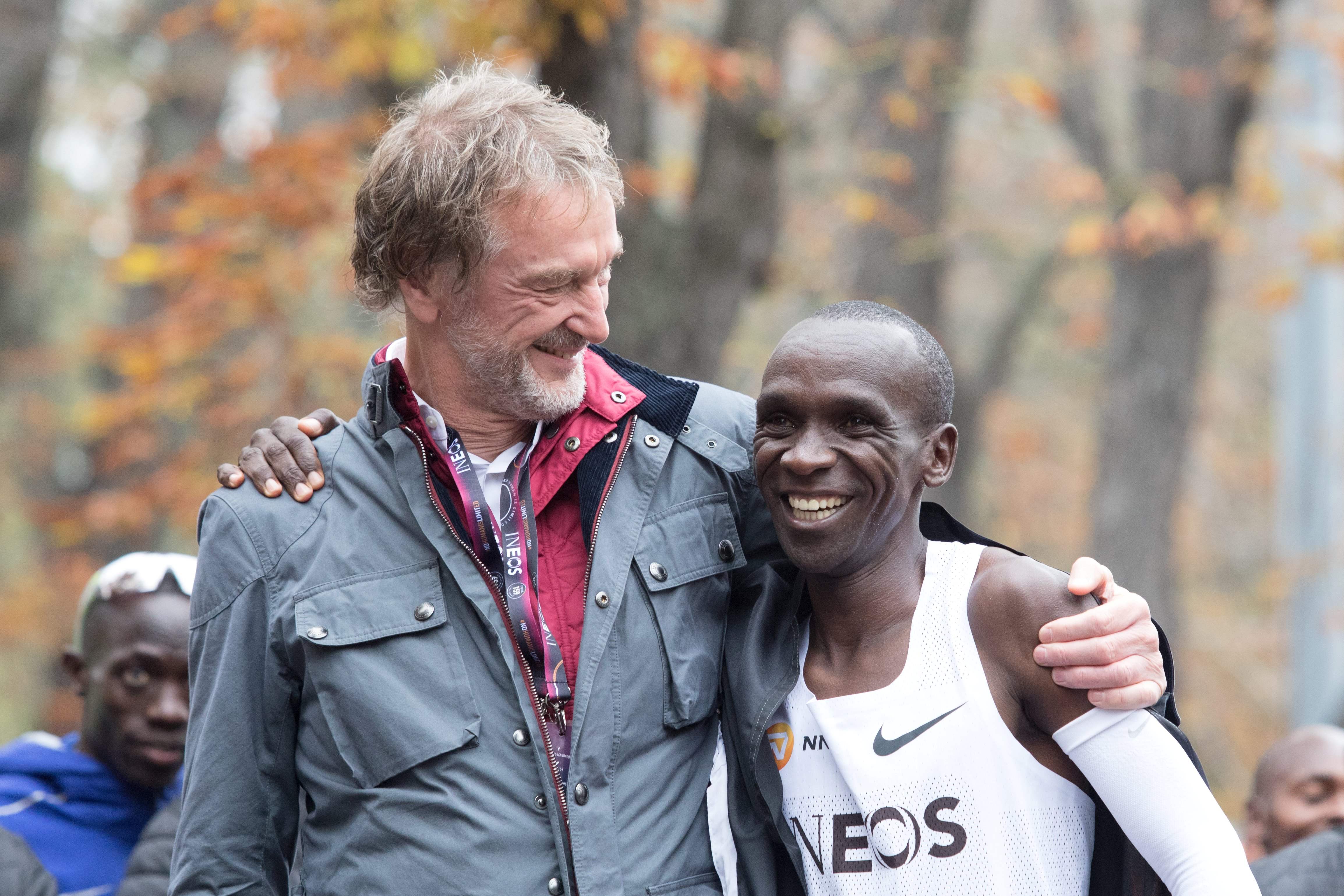
Ineos also stepped into the world of athletics, backing long-distance legend Eluid Kipchoge in his sub-two-hour marathon attempt.
open image in gallery
Didn’t he try to buy Chelsea?
Yes, Ratcliffe made his move when the west London side was put up for sale by Russian oligarch Roman Abramovich, after he was sanctioned by the government as a consequence of the invasion of Ukraine and his links to Vladimir Putin.
Ratcliffe’s last-gasp offer was worth £4.25bn, including £2.5bn for the initial purchase and a further £1.75bn across 10 years to fund improvements to the stadium and team, and his pitch was similar to that made to Manchester United about creating a “fan-centred” ownership model.
“Our motives are simply to try and create a very fine club in London,” Ratcliffe, who grew up on a council estate in Manchester and supported United as a child, said at the time. “We have no profit motive because we make our money in other ways.”
But Ratcliffe’s bid was “rejected out of hand” and he lost out to Todd Boehly and the Clearlake consortium who now own the Blues.
How did he succeed in buying United?
When he was trying to complete a full takeover of the club, rather than just the 25 per cent stake he ended up with, fan surveys suggested Ratcliffe’s bid was the most popular of those parties interested, which makes sense given his links with the city and the club from childhood.
Despite his vast wealth, there were fears Ratcliffe would find himself blown out of the water by an approach from Qatari banker Sheikh Jassim Bin Hamad Al Thani but as our Chief Football Writer Miguel Delaney explained , the Brit’s personal approach ultimately outmanoeuvred the Qatari bid.
How is Ratcliffe’s Old Trafford reign going?
On the pitch, it is has been tough going for Manchester United since Ratcliffe took control of the club’s football operations. They did win the FA Cup, but the messy departure of Erik ten Hag – who was backed with a new contract only to be sacked soon afterwards – was followed by United’s worst season in the Premier League, finishing 14th under new manager Ruben Amorim.
Amorim was then sacked in January after a dramatic fallout with the hierarchy, most notably director of football Jason Wilcox, who was appointed by Ratcliffe amid widespread structural changes inside the club.
Those changes included a raft of controversial redundancies and other cost-cutting measures, despite continuing to spend vast outlays on transfer fees, player wages and compensation fees for managers and staff. There has also been backlash from fans over ticket prices.
However, Ratcliffe’s ambitious plans to build a state-of-the-art stadium to replace the dilapidated Old Trafford have been largely well received.
open image in gallery

What did he say about immigration?
Ratcliffe gave an interview to Sky News in which the 73-year-old defended “difficult” decisions taken at United since acquiring a stake in the club two years ago. But it was his comments about immigrants to Britain which stirred controversy – and a reaction from Starmer.
“You can’t have an economy with 9 million people on benefits and huge levels of immigrants coming in,” he said. “I mean, the UK is being colonised. It’s costing too much money. The UK has been colonised by immigrants.”
The prime minister responded with a statement on X, saying: “Offensive and wrong. Britain is a proud, tolerant and diverse country. Jim Ratcliffe should apologise.”
The Greater Manchester mayor added pressure, saying: “These comments go against everything for which Manchester has traditionally stood: a place where people of all races and faiths have pulled together over centuries to build our city and our institutions – including Manchester United FC.
“Calling for curbs on levels of immigration is one thing, portraying those who come here as a hostile invading force is quite another. It is inaccurate, insulting and inflammatory and should be withdrawn.”
Manchester United Supporters Trust also voiced its concern about Ratcliffe's claims on social media, saying: “Manchester United belongs to all of its supporters. No fan should feel excluded from following or supporting the club because of their race, religion, nationality or background. Comments from the club's senior leadership should make inclusion easier, not harder.
“This is not about politics; it is about ensuring that the custodians of Manchester United act in a way that unites supporters rather than marginalising any part of our fanbase.”