
'/%3e%3cdefs%3e%3clinearGradient%20id='prefix__paint0_linear_4737_37157'%20x1='3.018'%20y1='23.6'%20x2='44.925'%20y2='24.977'%20gradientUnits='userSpaceOnUse'%3e%3cstop%20stop-color='%231CB7FF'/%3e%3cstop%20offset='.502'%20stop-color='%232FF58B'/%3e%3c/linearGradient%3e%3c/defs%3e%3c/svg%3e)

World Cup winners reflect tactical trends – and England with 'Premier League DNA' should be favourites
Mar 12 2026 18:11 · By Alex Keble, football tactics writer · 28 Reads


View 4 Images
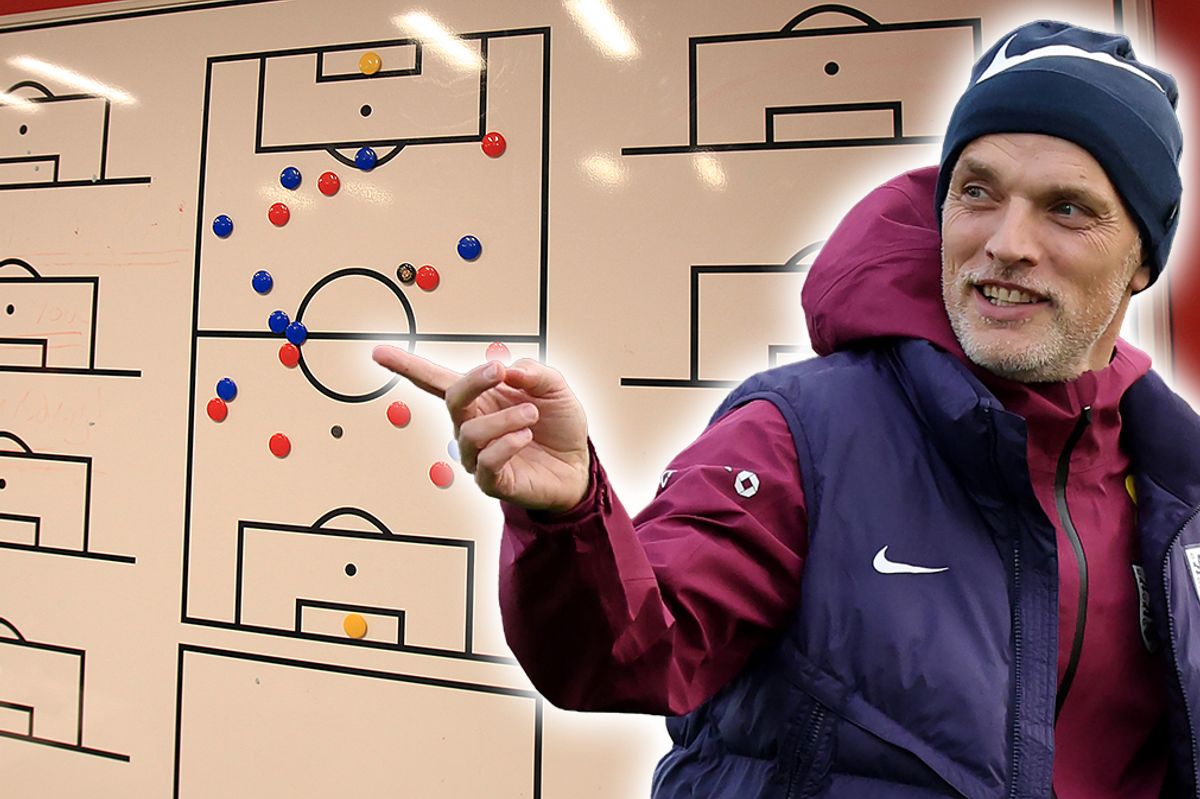
"We will inject a little bit of club football into federation football," was Thomas Tuchel's response to a question on style and intent during his first press conference as England manager.
"The Premier League is a very physical league, a very direct league. We should be proud enough of the culture and the style of English football and the English league to implement this."
In just a couple of lines Tuchel achieved something that has eluded every England manager in the 21st century. He created and defined an English DNA and, ingeniously, did so by leaning into the nation’s greatest untapped asset: its club competition’s dominance of Europe.
By doing so Tuchel has fired the starting gun on how the 2026 World Cup could be defined - and put England in pole position to win the tournament.
If that sounds like an exaggeration, then consider how, with uncanny consistency, the World Cup winners reflect the predominant tactical ideas of the time, providing an accurate snapshot of the football culture. In 2026 the tactical zeitgeist is represented by England, English football, and Tuchel himself.
The last two decades of World Cups really do fit tidily into stages of development in the game. Consistently, despite the weird winter tournament in 2022, the World Cup-winning nation has reflected the tactical fashion of the time.
In 2006 - when a ruthless Italian defence won the World Cup conceding just twice, an own goal and a penalty - football was sinking under the weight of conservatism. Jose Mourinho ’s Chelsea and Rafael Benitez ’s Liverpool set the tone for a decade of pragmatic football built on cagey defensive tactics, captured perfectly by Greece’s grinding run to Euro 2004 triumph.
In other words Italy’s cautious football in the summer of 2006, when Marcello Lippi’s narrow low block saw his side trudge through a stodgy and forgettable tournament, wasn’t an outlier; it was built for the times and it captured the times. When football was at its most defensive, who else could win the World Cup but the nation defined by catenaccio and its long shadow?
The pattern continued into 2010, when Spain’s tiki-taka became arguably the most famous tactical strategy football has ever seen. Vicente del Bosque ’s death-by-a-thousand passes approach suffocated the opposition into retreat and collapse.
View 4 Images
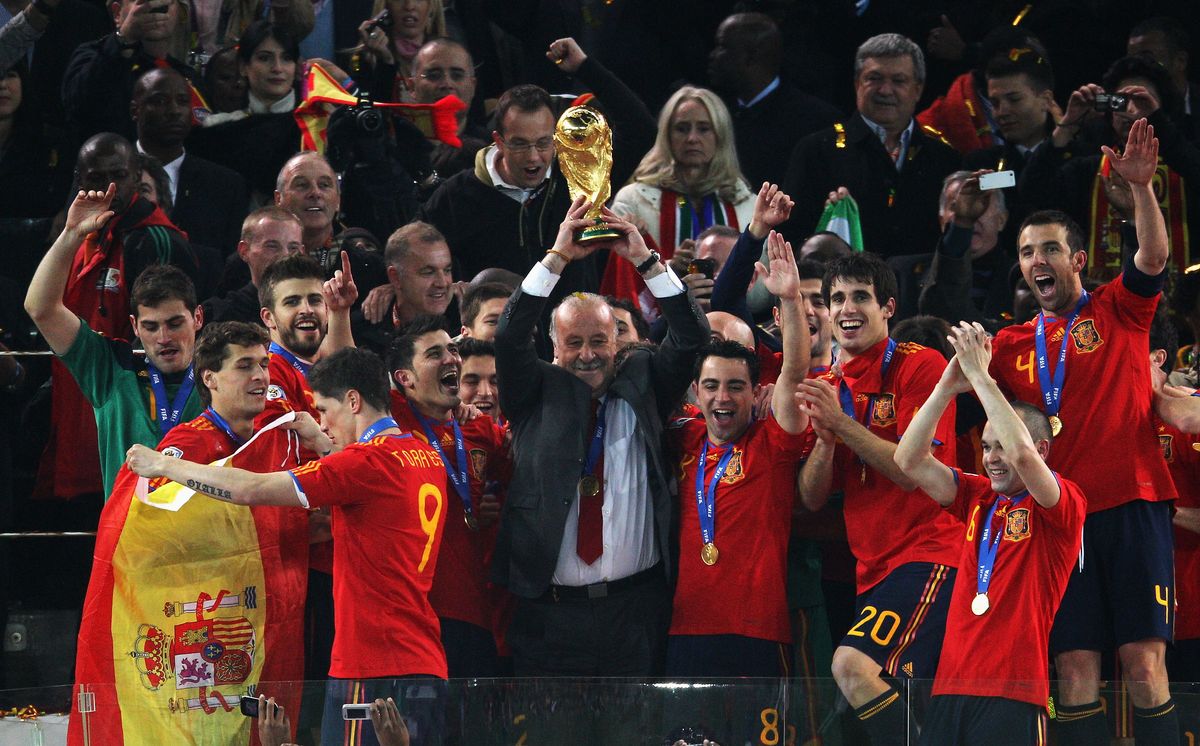
This, of course, reflected Pep Guardiola ’s Barcelona, who had swept the world with ultra-possession football funnelled through the same telepathic midfield triangle – Sergio Busquets, Xavi, and Andres Iniesta – that starred for their country. Before the 2010 World Cup even began it felt inevitable that Spain, the beating heart of European tactical progress, would triumph.
Four years later and German gegenpressing became the buzzword of the day, courtesy of Jurgen Klopp 's revolution at Borussia Dortmund in particular. Designed in reaction to the slow control of tiki-taka, gegenpressing aimed to win the ball back immediately after losing it in order to attack quickly in straight lines, taking advantage of the brief disruption that occurs when the opponent transitions from their in-possession shape to their out-of-possession shape.
Germany won the 2014 World Cup playing a version of Klopp’s gegenpressing, most famously beating Brazil 7-1 in the semi-final by hounding and harassing the Brazil midfield, their high-pressing game and rapid attacking football tearing through the centre. Once again, the World Cup-winning nation both founded and embodied the defining spirit of the time.
France’s triumph in 2018 doesn’t immediately appear to follow the trend, because Didier Deschamps ' blueprint - to sit in a cautious midblock 4-4-2, minimise risk, and maximise counter-attacking opportunities – reflected an understanding that international management could not replicate an increasingly dynamic and complex club game. Deschamps’ simplified ideas succeeded precisely because they contradicted the fashion set out by Guardiola’s centurion Manchester City side.
But that popular theory is wrong.
Guardiola’s City were the exception. In 2018, Zinedine Zidane 's Real Madrid won their third consecutive Champions League title with simplistic counter-attacking football similar to Deschamps’ France. Bundesliga winners Bayern Munich were defined by back-to-basics systems under Carlo Ancelotti and Jupp Heynckes . Juventus had monopolised Serie A with Max Allegri 's pragmatism. By contrast the Premier League was out on its own, nowhere near the world-leader in tactics, hence why Guardiola could canter to the title with 100 points.
Finally onto 2022, a tournament that didn’t follow any of the normal rules and therefore sits as a frustrating anomaly, although perhaps its very indistinctness is where the pattern can be found.
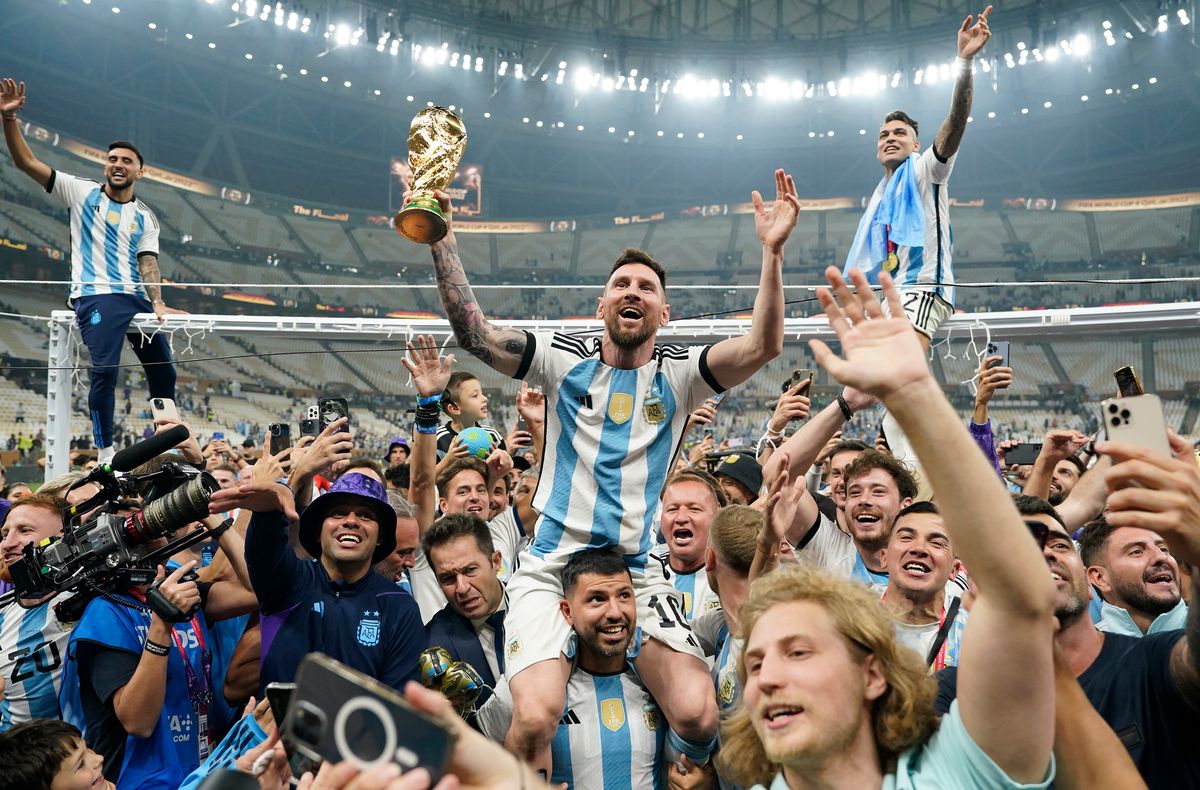
Argentina were winners because they had Lionel Messi but also because they were hugely tactically flexible, with Lionel Scaloni adapting on the fly to wobble on a tightrope through the rounds. From 4-4-2 to 4-3-3 to 5-3-2 and back again, Argentina changed formation five times between matches. In that respect they reflected the sheer weirdness of the winter tournament in Qatar; a formless tactical setup for a formless time.
View 4 Images
All of this begs the question: if the World Cup winners are usually at the vanguard of current tactical trends, then what is the zeitgeist in 2026 and who best encapsulates it?
This is where Tuchel’s thoughts on the Premier League are prescient. For the very first time in a World Cup year the Premier League is unquestionably the strongest division in the world, having finally used its overwhelming financial advantage to lure Europe’s best coaches to England.
Whatever the vanguard is, it will be right here.
In broad strokes, the modern Premier League is defined partly by set-pieces but more prominently by verticality; by teams either seeking to press hard and attack in the transition (Bournemouth, Crystal Palace, Newcastle United) or by baiting the opposition into pressing onto them and then spinning quickly in behind (Aston Villa, Chelsea, Brighton).
Central to this concept is the growing prevalence of man-to-man pressing in open play, a more dynamic – and less positional – way of defending that sees defenders pulled into all sorts of strange positions as they follow their pre-selected target around the pitch. The solution to that defensive setup has been to ease up on the Guardiola-style positional play (static, choreographed triangles) and ramp up dribbling or passing straight through the gaps.
This explains why the Premier League is increasingly direct, with focus on individual moments of quality and collective bursts of forward momentum, or "riding the rhythm," as Guardiola famously described it last year, when he noted that "modern football is not positional."
View 4 Images
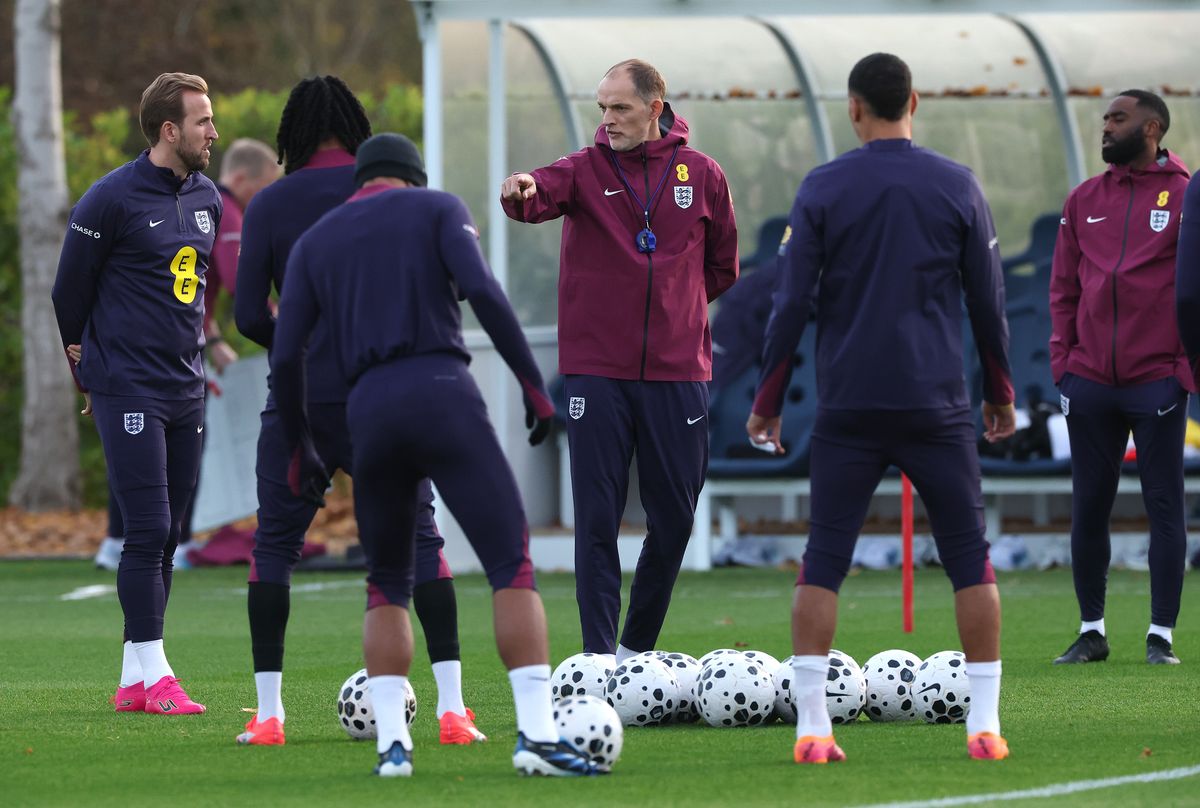
"We have to increase the intensity in our games," Tuchel said in his first England press conference . "I want to have more touches in the opponent's box. I want to have more ball recoveries in the opponent's half."
So far we haven’t seen too much of this because almost all of England’s opponents have been vastly inferior, although it is noteworthy that most of England’s goals have come in the transition. This is the Premier League’s most potent goalscoring weapon and England’s players are uniquely positioned to bring it to the world stage.
As is Tuchel. He has a long history of hitting the sweet spot between possession dominance and high-pressing, straight-lined intensity, with his Bayern Munich and Chelsea teams emphasising fast transitions and man-to-man pressing, the hallmarks of the Premier League this decade – in open play, that is.
But it might not be a tournament for that, because going on the vibe that dominates the world’s richest and most overbearing league there is a distinct possibility that 2026 will be the World Cup of set-pieces.
Tuchel knows this. England are blessed with Arsenal's set-piece takers Declan Rice and Bukayo Saka and 31 per cent (8/26) of their goals under Tuchel have come from dead balls, while he England manager recently explained to reporters that "the long throw-in is back." It is blindingly obvious that these weapons could be useful in a knockout tournament for which there is minimal time on the training ground.
Be it set-pieces or transitions, the early evidence tells us Tuchel is repurposing the Premier League as England’s true DNA and, therefore, embracing the tactical zeitgeist of 2026. Historically, that is how to win the World Cup.