
'/%3e%3cdefs%3e%3clinearGradient%20id='prefix__paint0_linear_4737_37157'%20x1='3.018'%20y1='23.6'%20x2='44.925'%20y2='24.977'%20gradientUnits='userSpaceOnUse'%3e%3cstop%20stop-color='%231CB7FF'/%3e%3cstop%20offset='.502'%20stop-color='%232FF58B'/%3e%3c/linearGradient%3e%3c/defs%3e%3c/svg%3e)


Legendary Arsenal coach responds to theory of where set-piece craze REALLY began
Apr 03 2026 17:10 · By John Cross/Chief Football Writer · 15 Reads


View 3 Images

Football has had inverted full backs, sweeper keepers and playing out from the back. Now the Premier League is dominated by set-pieces. Corners, long-throws, grappling at corners, blocking and free kicks.
There might be a whole generation who have no idea about the sweeper system and the only time they have heard the word libero is because an excellent football podcast goes by that name.
If history tells us anything, it is that football is cyclical. Playing styles, formations and even teams come and go. Liverpool's success in the 1980s felt like it would last forever. Manchester United the same in the 90s.
Manchester City boss Pep Guardiola , one of the greatest managers of all time, must take credit for inverted full backs and the risk and reward with playing out from the back.
But who takes credit for the set-piece fad? And it is a fad. It will soon become less important. Teams will find other ways. And defenders will combat it. Referees will clamp down on the grappling.
That is why football’s authorities are talking about it. From UEFA to FIFA to law makers IFAB. They are all looking, observing and discussing it.
And the popular theory - and it is just a theory - is that actually it began in the women’s game. Senior execs at those organisations have looked into it and traced the history.
The women’s game - as it has done in so many other ways - was, according to several of football’s deep thinkers, the start of the craze of corners. And it grew from there.
View 3 Images

Men’s football can learn a lot from the WSL when it comes to crowds, atmospheres and also England’s success under Sarina Wiegman .
But forward thinking managers like Mikel Arteta , Eddie Howe and Arne Slot must have got the ideas from somewhere. In the women’s game, it was not about the grappling. It was about crowding the keeper.
Most clubs now employ set-piece coaches - Arsenal ’s Nico Jover even has a Banksy-style portrait under a bridge next to the Emirates - and they are always looking for ideas, a fresh edge and inspiration.
Arsenal’s former women’s boss Vic Akers, who changed the face of the women’s game and enjoyed unprecedented success during his 22 years as manager, does recognise the similarities. Akers’ team won a historic quadruple in 2007 and remembers that surrounding the keeper had come in to the game at that time.
View 3 Images
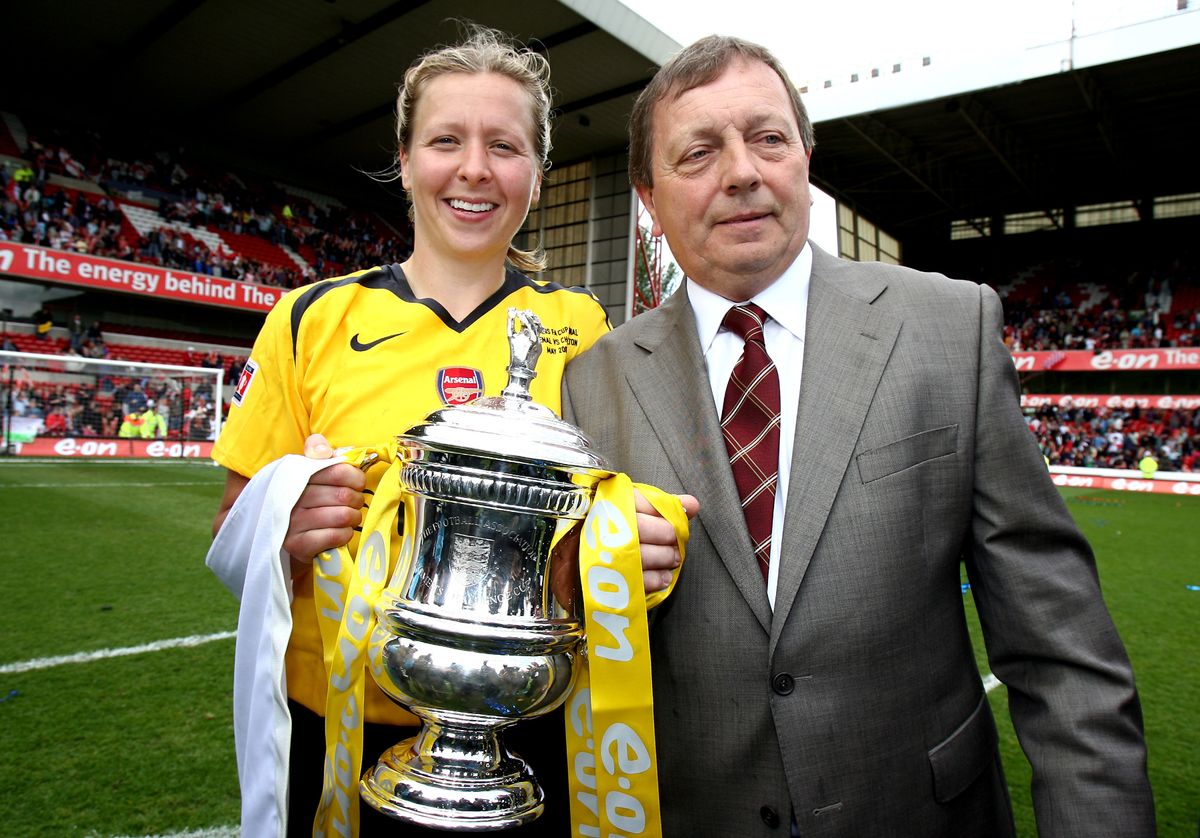
“I think it came from teams in Sweden, Denmark and Norway,” said Akers who was also the club’s legendary kitman. “It wasn’t something that we did but you could see some teams surrounding the goalkeeper at corners.
“Teams used it and it came into the game around that time. I remember it just before we won all four. But there was one very clear difference: it was surrounding the goalkeeper and there was not the same pushing and pulling. There’s no way that happened.
“You would see the goalkeeper being surrounded in a ring of players. And I would tell our keeper and players: ‘keep away from the ring - don’t get fouled.’
“The risk is greater for defenders and the goalkeeper because if they foul it’s a penalty. If the forwards foul it’s a free kick.
“It’s interesting to watch it now in the Premier League because it’s been like this for 12 months and is getting more common but it feels like the refs and Howard Webb will intervene.
“Back in our time, the ref would come into the dressing room and talk to the players before the game with a warning about what they were looking for. Maybe that’s what is needed now to make sure everyone knows.”
Even now, we are talking less about set-pieces and maybe that is a sign we are moving on until the next trend.