
'/%3e%3cdefs%3e%3clinearGradient%20id='prefix__paint0_linear_4737_37157'%20x1='3.018'%20y1='23.6'%20x2='44.925'%20y2='24.977'%20gradientUnits='userSpaceOnUse'%3e%3cstop%20stop-color='%231CB7FF'/%3e%3cstop%20offset='.502'%20stop-color='%232FF58B'/%3e%3c/linearGradient%3e%3c/defs%3e%3c/svg%3e)


VAR has failed the Premier League - it's time to cut our losses to save our game
Apr 18 2026 07:10 · Par Kate Mason · 15 Lectures


VAR has failed to deliver – enough is enough (Picture: Getty)
I was a believer. Bored by daily debates around obviously wrong offside calls and refereeing mistakes Row Z could see, when the Premier League started looking into VAR in 2018 I’ll admit to being a fan.
Before its debut in 2019-20, I was invited to spend an afternoon with other broadcasters trying out the system. We overturned on-field decisions using the video evidence they’d use in an eerily quiet Stockley Park. The referees working with us were earnest, the task was hard, it was all quite fun – and seemingly a logical step.
All of which meant when the Video Assistant Referee played his first Premier League game on Friday, August 9, 2019 I was on board.
No longer. I’m not quite sure when the tipping point was, and I recognise that the partiality of football fans means that bad decisions against Spurs loom largest in this house.
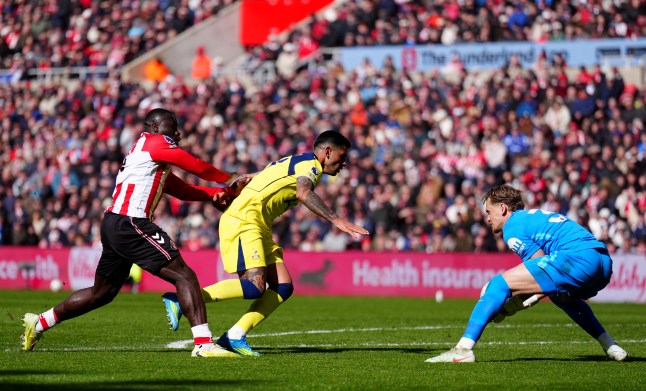
Last weekend Brian Brobbey’s excessively forceful and cynical push on Cristian Romero led to no second yellow, let alone a straight red, and I exploded. Already they had missed a potential straight red for his elbow on Pedro Porro and what in God’s name was the point of it all.
But I wasn’t in the stadium, or indeed the country, so I could sigh, walk away for a lovely Greek Mamos beer and WhatsApp everyone my complaints. To really experience the failure of VAR you have to be in a ground, where only the sighing part is definitely available.
Brian Brobbey (left) pushes Cristian Romero (Picture: PA)
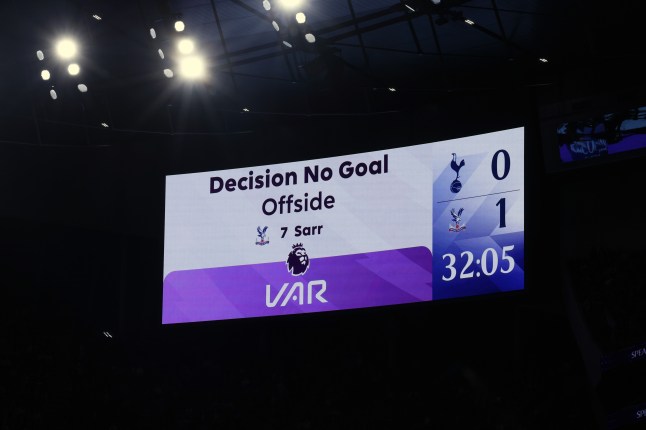
Remember Spurs’ defeat to Palace last month? That might have been the moment I gave up on VAR.
We all sat in our seats at the stadium and asked our neighbour and waited and railed and felt like the game was happening somewhere else, away from us – until we learned Palace attacker Ismaila Sarr’s nose was offside.
That was also the game where the on-field ref’s talkback to VAR failed, adding a few extra minutes of faff none of us needed.
We know that referees are people and people make mistakes.
VAR was supposed to give on-field referees an extra pair of eyes to sense-check their calls. Instead, we seem to have doubled up on errors and time-wasting.
No week in football is complete without another grandee opining on the need to fundamentally change the game. This time it’s Aurelio De Laurentiis the Napoli owner, who wants halves to be cut to 25 minutes lest the youngsters lose focus over a traditional 90-minute game.
Cool idea, good to bandy about what you’d do if you were Football God. But back on planet Earth, perhaps the world’s biggest sports success story – the most widespread cultural phenomenon there is in modern history –doesn’t actually need much tinkering.
West Ham fans celebrate Axel Disasi’s late leveller against Leeds and this is the outpouring of emotion the game cannot lose (Picture: Shutterstock)

The very best thing in football is the feeling of the goal. The breath before and after the shot, the chaos of a switch in fortunes, the swish of the net, the wide eyes, the impudent celebration. That must be protected at all costs. For that reason alone, VAR must end.
Before this point in my VAR journey, I also quite liked the captain’s review approach to video-assisted decisions. It’d be a little like in tennis or cricket, where participants get a say on when refereeing is rechecked.
Perhaps one review a game works? It could be theatre, toying with the opposition at apposite moments. But it still affects the flow of the game.
The bits I would save are automated or semi-automated. We should only use video assistance for yes/no decisions.
Goalline technology is good (when switched on…), that stays.
Semi-automated offside: in – but it has to be faster. And, on offside, there will always be a point at which a player becomes offside, so if we don’t like that a toenail ahead counts, fine, let’s set it further back, but it is an absolute. It’s like being pregnant – you either are or you aren’t. No point arguing.