
'/%3e%3cdefs%3e%3clinearGradient%20id='prefix__paint0_linear_4737_37157'%20x1='3.018'%20y1='23.6'%20x2='44.925'%20y2='24.977'%20gradientUnits='userSpaceOnUse'%3e%3cstop%20stop-color='%231CB7FF'/%3e%3cstop%20offset='.502'%20stop-color='%232FF58B'/%3e%3c/linearGradient%3e%3c/defs%3e%3c/svg%3e)


Michael Carrick’s Tactical Flexibility Is Boosting his Case As Next Manchester United Head Coach
Apr 27 2026 12:11 · بواسطة onefootball.com · 34 عدد المشاهدات


Many painted Michael Carrick as just another Ole Gunnar Solskjaer; however, Manchester United’s display against Chelsea at Stamford Bridge offers another perspective, as the former Manchester United midfielder displayed tactical shrewdness and flexibility in his approach.
As another Premier League campaign draws to a close, the race for the Champions League places is reaching the definitive stage, and United walked away from Stamford Bridge with more than just 3 points.
Against Chelsea , United and Michael Carrick showcased signs of change and course-correction, which were essential following United’s dismal display against Leeds United.
Manchester United deployed a far more effective and comprehensive out-of-possession approach against Chelsea compared to what they demonstrated against Leeds at Old Trafford.
Against Leeds, United used a narrow diamond press that was easily exploited by the men in white, using a wider build-up to stretch United’s press horizontally. Also, the Red Devils’ inability to push up collectively as a unit to back the press and go man-to-man when needed allowed Leeds United to gain numerical superiority in different parts of the pitch.
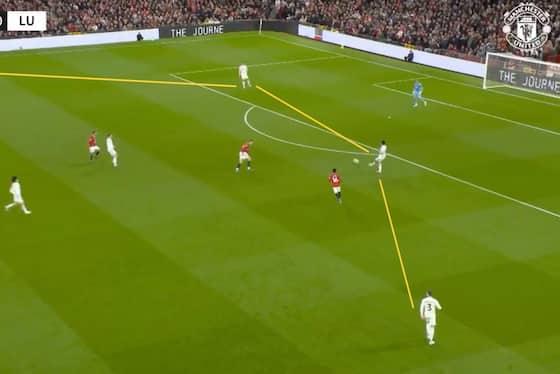
Image Credit: MUTV
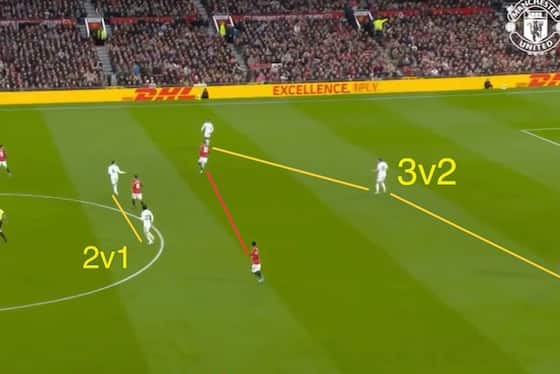
Image Credit: MUTV
However, against Chelsea , Carrick’s men deployed a more cohesive and robust out-of-possession structure.
Manchester United used a 4-2-4 out-of-possession shape against the Blues, which often entailed setting up a front four high-block that could transition into a high-press as well as a mid-block depending on the state of the game.
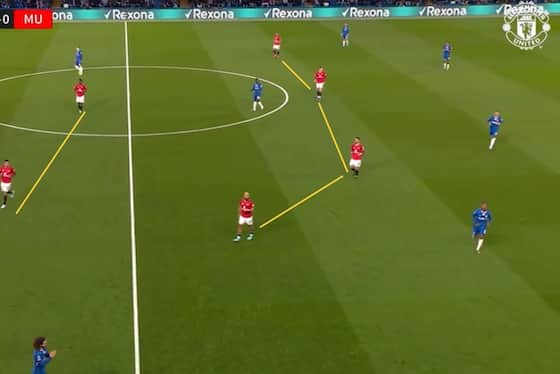
Image Credit: MUTV
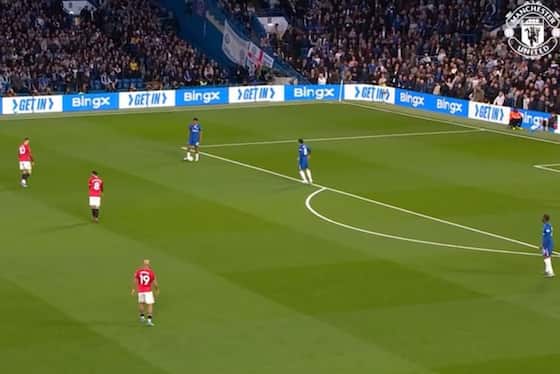
Image Credit: MUTV
The intention behind United’s shape was to prevent Chelsea from progressing centrally, and it was often the responsibility of one of Bruno Fernandes or Benjamin Šeško to mark Chelsea’s single pivot and close passing lanes to him. Although the home side often used different build-up shapes throughout the game to counter Carrick’s well-planned approach, which required United to alter their strategy.
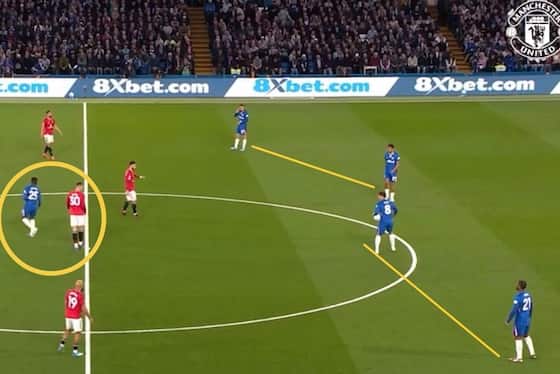
Image Credit: MUTV
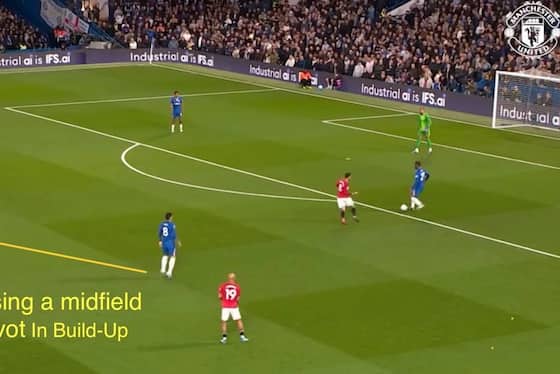
Image Credit: MUTV
During his brief period as United’s Interim boss, Michael Carrick has often used a zonal pressing system, an approach that has rewarded him with points and plaudits in these early days of a potentially longer tenure; however, the same approach has come under fire from fans and critics alike as teams have figured out ways to manipulate the said approach.
Leeds United, in particular, demonstrated how to dismantle United’s passive pressing structure. Nevertheless, the out-of-possession strategy utilised by Carrick’s men at Stamford Bridge was a welcome change, as it involved a mixture of both the approaches: zonal as well as man-to-man.
Against Chelsea , United on several occasions utilised a man-to-man pressing structure, especially in the first half. This allowed the away side to be aggressive off the ball and often forced Chelsea all the way back to Robert Sánchez.
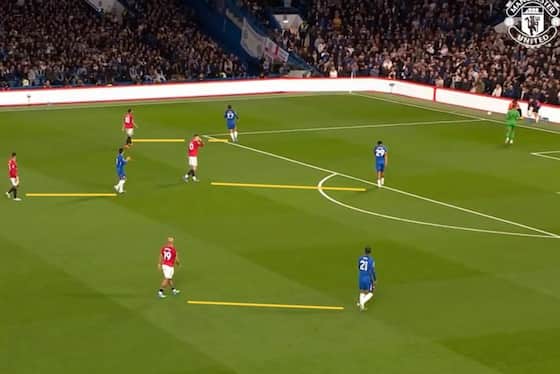
Image Credit: MUTV
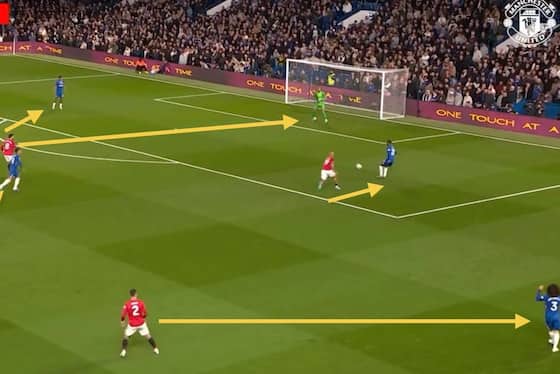
Image Credit: MUTV
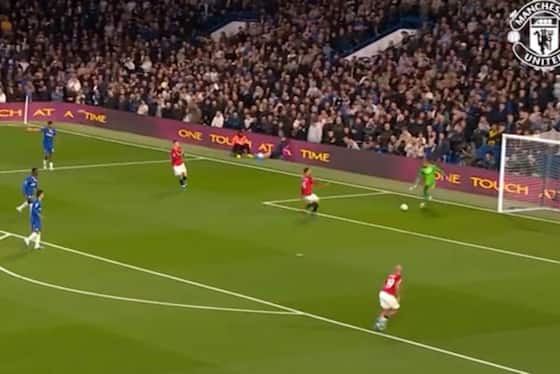
Image Credit: MUTV
The out-of-possession strategy adopted by United’s head coach, which included zonal and occasional man-to-man press, paid dividends, especially in the first half, as Chelsea were often forced to go long since United were successful in stifling their build-up and preventing them from progressing centrally.
The tendency of United’s full-backs to also push-up and back the press, be that a zonal press or a man-to-man one, also aided the away side’s cause, as the Blues were forced to resort to the long ball approach, something they are not particularly effective at.
However, United’s out-of-possession performance was not devoid of flaws as the Red Devils failed to continue their proactive approach in the second-half and opted to sit back instead, consequently conceding possession, field-tilt, and soaking up waves of Chelsea attack.
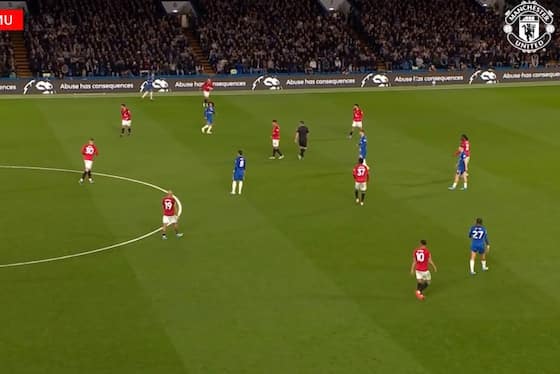
Image Credit: MUTV
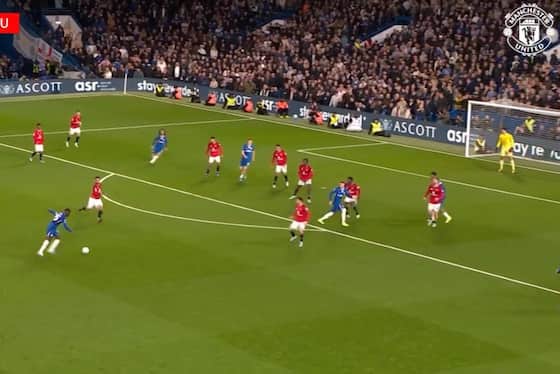
Image Credit: MUTV
Manchester United’s game model under their previous head coach, Ruben Amorim, was quite rigid; however, ever since Michael Carrick has retaken the reins of his former side, he has deployed a fairly fluid in-possession game model. But with time and more training sessions, these elements of his system are becoming more prominent, and United’s display against Chelsea was conclusive proof of this intention and approach.
Diogo Dalot is a player who had previously excelled at inverting into the midfield under former United boss Erik ten Hag, primarily due to his on-ball capabilities and athletic prowess. Carrick utilised these capabilities of his against Chelsea , as he gave Dalot the freedom to often interchange position with Bryan Mbeumo, thus allowing Dalot to move infield while Mbeumo held width on the right-hand side. This enabled the United forward to be in a 1v1 situation against a Chelsea player defending the left-hand side, be that Marc Cucurella or Pedro Neto.
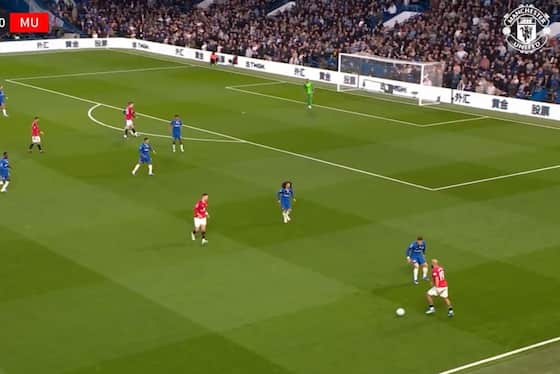
Image Credit: MUTV
United’s build-up structure was also not restricted to one particular shape, as the Red Devils switched between various different build-up shapes in order to exploit Chelsea’s 4-4-2 man-to-man press. Carrick’s men initially used a wide 4-2 base structure with the centre-backs splitting wide, both full-backs dropping deep and hugging the touchline, and a staggered midfield two of Kobbie Mainoo and Casemiro, with Mainoo being the deepest midfielder due to his technical security on the ball. This was essentially in an attempt to stretch the Chelsea press; however, United were not afraid to shift to 2-3-5 and 3-2-5 In-possession shapes whenever needed.
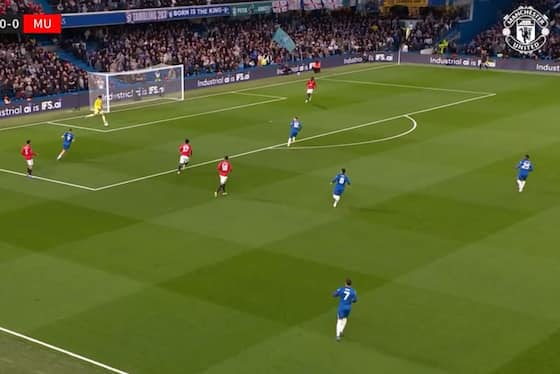
Image Credit: MUTV
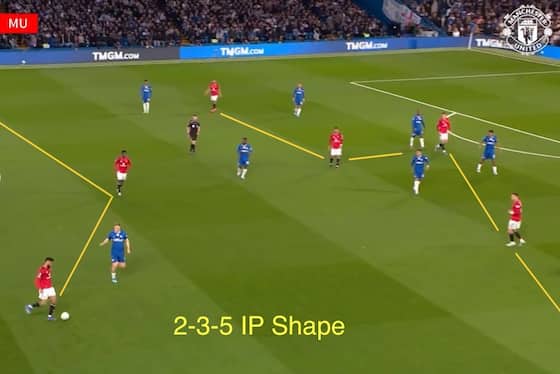
Image Credit: MUTV
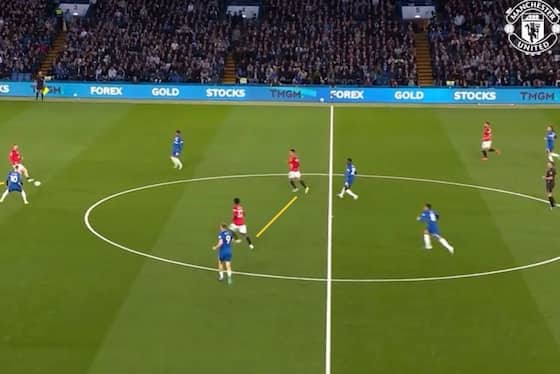
Image Credit: MUTV
Another interesting tweak that Carrick used was to push both the full-backs high during the build-up phase on certain occasions, in order to pin back the Chelsea wingers. This allowed United’s wide-split centre-backs to have more time on the ball with less pressure.
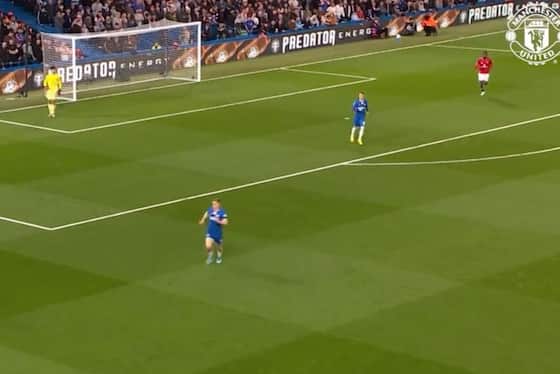
Image Credit: MUTV
Positional Interchanges and varied build-up structures were not the only tools in Michael Carrick’s arsenal to disrupt the Chelsea man-to-man press; the United Interim head coach also allowed certain forward players to drop deep during United’s build-up phase so as to drag their marker forward and create space behind. Matheus Cunha and Bruno Fernandes were often found on these duties in an attempt to drag their marker forward so that a direct pass may be played into the vacated space.
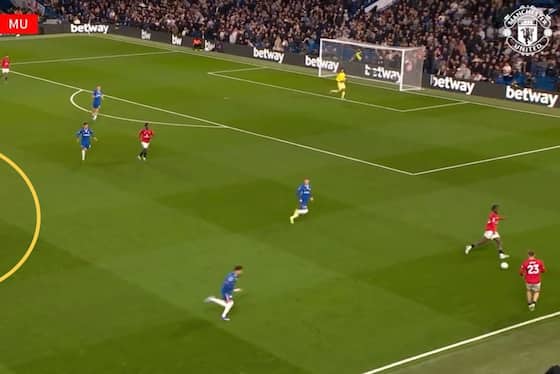
Image Credit: MUTV
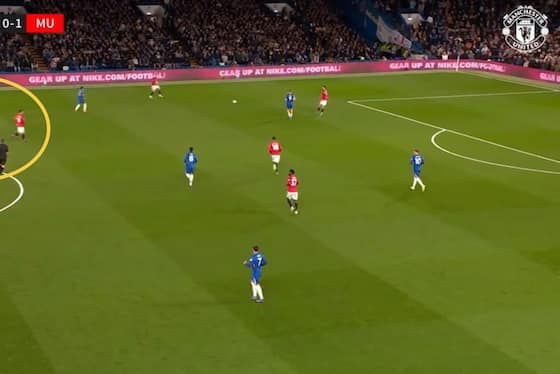
Image Credit: MUTV
Kobbie Mainoo’s performance at Stamford Bridge was arguably his best performance of the season, and a lot of credit should go to Carrick for the way he utilised the young midfielder against Chelsea . Mainoo is United’s most gifted player when it comes to playing against pressure and dictating tempo, and Michael Carrick managed to take advantage of these traits against a Chelsea side that likes to press man-to-man aggressively.
Carrick deployed Mainoo as the deepest midfielder during both the In-Possession phase and the out-of-possession phase.
During the build-up and In-possession phase, the idea was clear to take advantage of Mainoo’s technical security and press-resistance when United had the ball closer to their own Penalty area, while, in the out-of-possession phase, Mainoo was tasked with marking his international teammate Cole Palmer, and United’s young star managed to do a tidy job on both accounts.
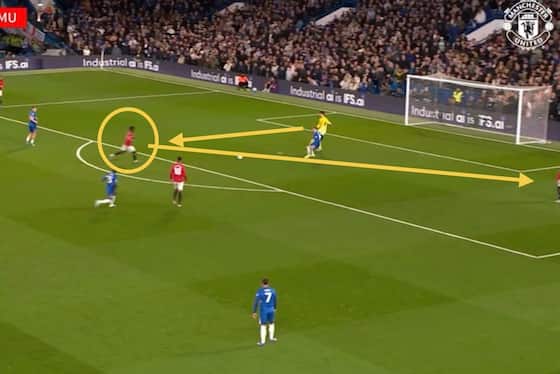
Image Credit: MUTV
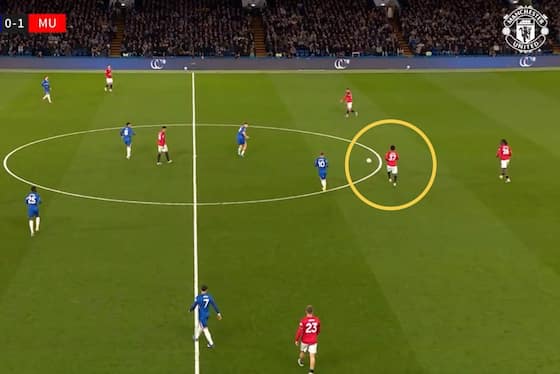
Image Credit: MUTV
Michael Carrick’s Manchester United takes on Keith Andrews Brentford on April 27, 2026, at Old Trafford. A late Monday evening clash, the outcome of which bears great significance to the European aspirations of both clubs. United sit third in the table, level on points with their rivals Liverpool and Aston Villa, while Brentford are ninth.
A victory for the Red Devils will take them three points closer to Champions League qualification and three points clear of their arch rivals Liverpool, while for Brentford, a victory at Old Trafford will see them jump to the sixth position ahead of Brighton and Hove Albion, with fifty-one points, placing them in the Europa League spot, a big milestone for the Bees.
Carrick’s Reds have to be wary, as Brentford have proven to be tricky customers. The last two meetings between these sides resulted in victories for the Bees. Keith Andrews’ men are unbeaten in their last five games. Even though the said five results were all draws, Brentford poses a formidable threat to United as they are a team that specialises in transitions, direct play, and physicality, all of them being areas United are not best at.